”Courageous judge reportedly made Malaba “very unhappy” with bail ruling for opposition politician”
HARARE – A judge who recently granted bail to MDC vice chairman Job Sikhala has been suspended by the Judicial Service Commission headed by Chief Justice Luke Malaba.
Justice Erica Ndewere of the Harare High Court is accused of “misconduct and conduct inconsistent with being a judicial officer,” said Justice, Legal and Parliamentary Affairs secretary Virginia Mabhiza.
The JSC has referred the matter to President Emmerson Mnangagwa to appoint a tribunal to “inquire into the question of removal from office of Justice Erica Ndewere,” Mabhiza added.
Sikhala, charged with incitement of violence, was granted bail on appeal by Justice Ndewere on September 22 after spending a month at the notorious Chikurubi Maximum Security Prison.
A day later, on September 23, legal commentator Alex Magaisa said he feared for Ndewere.
Magaisa wrote on Twitter: “Don’t underestimate the courage of the judge who gave Job Sikhala bail. I wouldn’t be surprised if she suffers for it. When you do things against the system’s wishes, the system finds something to hit you with. Sooner or later you will hear they are investigating Justice Ndewere for this and that.”
Before delivering her judgement, sources said that Ndewere “avoided the usual procedures and made sure the spies in the judicial structures didn’t have the judgement beforehand.”
Malaba was described as being “very unhappy” at the judge, which would have precipitated her suspension.
According to Magaisa, “individual judges are under pressure” to rule in favour of the government.
Ndewere is the second judge to be suspended after Justice Francis Bere of the Supreme Court had a tribunal appointed for him over allegations that he interfered in a civil case involving the Zimbabwe National Road Administration (Zinara) and his relatives.
The tribunal sat without his input after he refused to cooperate following a refusal by the panel to have one of its members, Advocate Takawira Nzombe, recuse himself because of his alleged links to Harare lawyer Itayi Ndudzo, who was a key witness in the inquiry.
President Emmerson Mnangagwa described the anti-government protests that were planned for July 31, which Sikhala strongly agitated for, as an “insurrection”. His government has been accused of interfering with the legal system, particularly the lower courts, which routinely deny bail to human rights defenders and opposition activists.
PRESIDENT Emmerson Mnangagwa’s government is set to improve the perks for the leader of the opposition after MDC-T leader Thokozani Khupe ascended to the position through the back door.
Khupe was sworn last week into Parliament alongside 14 other MDC-T officials as a direct replacement of MDC Alliance proportional representation legislators that she recalled under controversial circumstances.
She immediately took over as the official leader of the opposition, a position that was previously held by MDC Alliance’s Tabitha Khumalo.
MDC-T officials who spoke on condition of anonymity said Mnangagwa was determined to formalise his proposal to create the office of the leader of the opposition, which he first made in 2018.
Mnangagwa dangled the carrot to MDC Alliance leader Nelson Chamisa, who had rejected the outcome of the presidential election, which he argued was rigged.
Chamisa rejected the offer and Khupe is said to be now prepared to assume the position snubbed by her bitter rival.
Mnangagwa’s spokesperson George Charamba was not taking calls and did not respond to questions on his WhatsApp number yesterday. Charamba, however, tweeted: “Leader of the opposition portfolio comes with perks.”
Justice minister Ziyambi Ziyambi was not picking calls and Information minister Monica Mutsvangwa referred questions to Parliament.
Kennedy Chokuda, the clerk of Parliament, said he could not comment on the alleged plans to strengthen the position.
“Ask the politicians,” Chokuda said. “The position of leader of the opposition in the House has always been recognised, from way back, you recall Gibson Sibanda.
“The post is there in Parliament and the leader of the opposition is consulted when business is done.”
At the moment, the leader of the House is recognised under standing orders and rules of Parliament.
The leader of the House ordinarily gets a Parliament residence and car. Khupe herself stayed in a Parliament residence in Harare’s Mt Pleasant suburb when she was leader of the House under the leadership of the late MDC founding leader Morgan Tsvangirai.
She also reportedly got two cars from Parliament, one as a constituency MP and the other for her post as leader of the opposition.
Khupe’s spokesperson Khalipani Phugeni said he was not aware of the proposals to bump up Khupe’s perks and enhance her status.
“I am not aware of that, what I know is, she will simply take over from Tabitha Khumalo,” Phugeni said.
Khupe’s associates, however, said she has been promised an office in Parliament and perks that will include pension because she will occupy a ‘constitutional’ office.
The move is allegedly meant to create an impression in the international community that Mnangagwa is tolerant of opposition parties.
Mnangagwa in 2018, during interviews with United States television networks on the sidelines of the United Nations general assembly, said he planned to give Chamisa certain perks as leader of the opposition.
The gesture was seen as an attempt to end the dispute that ensued after the July elections where the MDC Alliance accused the Zanu PF leader of rigging the elections.
Chamisa declined the offer saying he was voted to go to State House, not Parliament.
At the time Ziyambi said the constitution could be amended to allow Chamisa into Parliament since he was not an elected MP.
Charamba said then that the office was going to be created as Mnangagwa’s capacity building measures.
Khupe and Mnangagwa are alleged to be working together to destroy Chamisa, an accusation they both deny.
They are allegedly plotting to have all Chamisa MPs recalled, a development to allow Zanu PF to amend the constitution to raise the presidential running age limit to 50 to block the MDC leader, who is in his 40s.
Zanu PF is also allegedly plotting to form a unity government with Khupe and suspend elections until 2027 to effectively shut Chamisa out.
Zimbabwe student abducted and beatenTawanda Muchehiwa was abducted by men believed to be state security agents and beaten for three days.
It’s high time we had a change in leadership. We need more women in power who are educated and informed enough to make a change. No woman or child should be dying in the 21st century due to childbirth. Those with the power to make a change are busy looting money and land, buying designer clothes or simply turning a blind eye.
Zimbabweans MUST have a serious conversation about the pregnant women dying in Zimbabwe’s hospitals daily due to lack of theatres.
The biggest hospital in Zimbabwe, Harare Hospital, now called Sally Mugabe Hospital, only has 2 maternity theaters built by Ian Smith in 1977.
Today they are not working, one of them sometimes works when nurses are on duty.
2500 pregnant women are dying annually in Zimbabwe due to this lack of investment, yet Zimbabwe has every mineral under the sun from Gold, diamonds, platinum you name it!
Yet 2500 pregnant Zimbabwean women are dying yearly due to lack of care by the regime!
That number is the equivalent of 15 jumbo jets crashing every year, and killing 2500 Zimbabwean pregnant woman due to corruption!
What kind of society keeps quiet when something like that is happening under its nose!
In country, biggest political opposition faces extinction amid alleged government machinations to set up single-party rule
Jeffrey Moyo |02.10.2020
Harare, Zimbabwe
After casting his vote two years ago for Zimbabwe’s Movement for Democratic Change Alliance (MDC), now Benard Mhere has grown bitter, accusing the ruling party of trying to destroy the MDC.
Mhere, 31, says openly that he feels betrayed.
Opposition being gradually decapitated
A resident of Glenview in the capital Harare, a constituency once dominated by the country’s opposition MDC party over the years, Mhere said he faces confusion as his party is gradually being elbowed out by what he calls “plots” by the country’s ruling Zimbabwe Africa National Union Patriotic Front (Zanu-PF) “to get rid of the biggest opposition”.
“Soon, we will be left with no genuine opposition party in our country,” Mhere told Anadolu Agency.
In 2018, soon after the death of the opposition MDC leader Morgan Tsvangirai, Nelson Chamisa moved in to assert himself as heir, a move that displeased Thokozani Khupe, once deputy president of the country’s biggest opposition party.
In 2019, Chamisa and his MDC Alliance held an elective congress where he was officially elected the party chair, battling to fend off the legitimacy crisis he faced after seizing the reins of power following the death of Tsvangirai from colon cancer.
Chamisa, who contested for presidency in the 2018 elections, did not accept the outcome of the elections which saw Emmerson Mnangagwa declaring victory.
Even as Chamisa approached the country’s Constitutional Court challenging the elections outcome, Mnangagwa was still declared winner by the same court, yet Chamisa and his MDC Alliance have remained adamant Mnangagwa stole the elections.
Zimbabwean president controls opposition
Apparently desperate for recognition as the man on the seat of power in this Southern African nation, Mnangagwa last year in May launched the Political Actors’ Dialogue (POLAD), comprising of political leaders drawn from the country’s opposition political parties.
Ostensibly, POLAD was meant to have opposition leaders proffer ideas on how Zimbabwe may address its economic woes, but with the country’s biggest opposition party, the MDC Alliance out of the arrangement, analysts have hugely dismissed POLAD as a ploy to destroy the opposition.
Yet, for ordinary MDC Alliance backers like Mhere, holder of a university degree in Information Technology, disgruntlement has become the order of the day as he witnesses the party he supports “facing a ruthless Zanu-PF”.
“Zanu-PF only wants to make sure MDC Alliance accedes to its leadership, which means the party by doing so would cease being an opposition, which MDC Alliance has refused to do,” said Mhere.
Zimbabwe’s leader for 1-party state
In fact, Zimbabwe’s pro-democracy activists like Claris Madhuku strongly believe “Mnangagwa is moving towards establishing a one-party State.”
Although Chamisa contested the 2018 polls under the MDC-Alliance, Zimbabwe’s Supreme Court ruling this year effectively stripped the top opposition leader of his claim over the country’s main faction of the MDC giving the reins to his nemesis, Thokozani Khupe.
Khupe had however participated in the polls under another faction of the MDC, and lost hugely after she managed to get only 45000 of the votes.
Opposition opposes opposition
Based on the Supreme Court ruling, Khupe who is a POLAD member formed by Mnangagwa then went on to fire MDC-Alliance parliamentarians and councilors who refused to accede to her leadership.
Now, to this, Alex Magaisa, a United Kingdom-based Zimbabwean academic and lecturer of law at the Kent Law School of the University of Kent, said ‘Mnangagwa’s strategic goal is not just a threat to the MDC Alliance as an institution, but to the very idea of political pluralism and serious opposition politics in Zimbabwe.’
“Mnangagwa’s dictatorial streak has been most evident in his tireless scheming to annihilate and take control of the main opposition political party, the MDC Alliance,” said Magaisa.
In June this year, Zimbabwe’s military and police helped Khupe to seize the MDC Alliance Headquarters in Harare, a move pro-democracy activist Owen Dhliwayo here said “unmasked Khupe as Mnangagwa’s ally in trying to destroy the genuine opposition.”
Ruling party in charge of opposition
In the face of Mnangagwa’s alleged maneuvers to swallow Zimbabwe’s main opposition considered to be the only serious threat to his power, Magaisa said that “dictators prefer to rule without opposition. If there is any opposition, they would like to control it.”
“For Mnangagwa, the strategic goal is very simple: to weaken the MDC Alliance by taking control of it through his surrogates,” said Magaisa.
To Zimbabwe’s opposition leaders like Wurayai Zembe, the head of the opposition Democratic Party, “one-party state has always been the governance agenda of Zanu-PF and its leaders since formation in 1963.”
But, Farai Gwenhure, an independent political analyst and law student at the University of South Africa, said Zimbabwe’s President Mnangagwa has no capacity to forge a one-party state.
“He [Mnangagwa] has no capacity to think that far; he is just a vindictive person who is revenging the humiliation of being called illegitimate by Chamisa; he is therefore going after him,” Gwenhuresaid, adding: “He is scared of a possible collaboration between the MDC Alliance and a disgruntled faction of his party [Zanu-PF].”
As such, said Gwenhure, to dismantle the possibility of the equation, the easier side to attack is the MDC Alliance because it is the one with no guns.
“A one-party state is not possible in Zimbabwe, you will have to butcher millions of people to achieve it,” added Gwenhure.
Ruling party always envisioned 1-party state
Yet, Rashweat Mukundu, the Africa adviser of Denmark-based NGO International Media Support, said: “Zanu-PF never abandoned its one-party state dream and Mnangagwa has embraced this with much energy.”
With the MDC Alliance facing extinction through Mnangagwa’s machinations, Mukundu also said: “Organized opposition maybe in disarray because of state repression, but anger and opposition by ordinary people has risen exponentially and Mnangagwa’s government faces the risk of protests by unorganized groups without anyone to negotiate with.”
For Zanu-PF diehard backers like Taurai Kandishaya, the head of the Zimbabwe Citizens Forum — a civil society organization with links to Zanu-PF — the idea of a one-party state here is unfounded.
“There is no dream of a one-party state in a country with more than 100 opposition parties. Unless you are monopolizing opposition space to only Nelson Chamisa whose career died out of his own mistakes,” Kandishaya told Anadolu Agency.
Human rights are moral entitlements that every individual in the world possesses simply in virtue of the fact that he or she is a human being. In claiming our human rights, we are making a moral claim, normally on our own government, that you cannot do that, because it is a violation of my moral sphere and my personal dignity. No-one – no individual, no government – can ever take away our human rights.
Question: Where do they come from?
They come from the fact that we are not only physical beings, but also moral and spiritual human beings. Human rights are needed to protect and preserve every individual’s humanity, to ensure that every individual can live a life of dignity and a life that is worthy of a human being.
Question: Why “should” anyone respect them?
Fundamentally, because everyone is a human being and therefore a moral being. The majority of individuals, if shown that they are violating someone else’s personal dignity, will try to refrain. In general, people do not want to hurt other people. However, in addition to the moral sanctions of one’s own conscience or that of others, there is now legislation in most countries of the world which obliges governments to respect the basic human rights of citizens, even when they may be unwilling to do so.
Question: Who has human rights?
Absolutely everyone. Criminals, heads of state, children, men, women, Africans, Americans, Europeans, refugees, stateless persons, the unemployed, those in employment, bankers, those accused of carrying out acts of terrorism, charity workers, teachers, dancers, astronauts …
Question: Even criminals and heads of state?
Absolutely everyone. Criminals and heads of state are humans too. The power of human rights lies in the very fact that they treat everyone as equal in terms of possessing human dignity. Some people may have violated the rights of others or may pose a threat to society and may therefore need to have their rights limited in some way in order to protect others, but only within certain limits. These limits are defined as being the minimum which is necessary for a life of human dignity.
Question: Why do some groups require special human rights? Does this mean that they have more rights than others?
No, some groups, such as the Roma in Europe or Dalits and scheduled castes in India, have suffered such long-term discrimination in our societies that they need special measures to enable them to access general human rights standards on an equal basis with others. Years of institutionalised discrimination and stereotypes, and outright hatred and obstacles, mean that just announcing generally applicable rights to them, and expecting that this is enough to ensure equality, would be farcical.
Question: Why do we talk about human rights and not human responsibilities?
Although some thinkers and NGOs have put forward strong arguments for the need for human responsibilities and even codes or declaration to articulate these, the human rights community has generally been reticent about this debate. The reason is that many governments make the “granting” of human rights dependent on certain “duties” imposed by the state or ruler, in this way making the whole idea of rights as birthrights meaningless. However, it goes without saying that we need to act responsibly as individuals and groups to respect the rights of others, not to abuse human rights and to advance the rights of others as well as ourselves. In fact, article 29 of the UDHR recognises that, “1. Everyone has duties to the community in which alone the free and full development of his personality is possible. 2. In the exercise of his rights and freedoms, everyone shall be subject only to such limitations as are determined by law solely for the purpose of securing due recognition and respect for the rights and freedoms of others and of meeting the just requirements of morality, public order and the general welfare in a democratic society.”.
Question: Who looks after human rights?
We all need to. There is legislation both at national and at international levels which imposes restrictions on what governments are able to do to their citizens but, if no-one points out that their actions are violating international norms, governments can continue to violate them with impunity. As individuals, we need not only to respect the rights of others in our everyday lives but also to keep watch on our governments and on others. The protective systems are there for all of us if we use them.
Question: How can I defend my rights?
Try pointing out that they have been violated; claim your rights. Let the other person know that you know they are not entitled to treat you in this way.. Pinpoint the relevant articles in the UDHR, in the ECHR or the other international documents. If there is legislation in your own country, point to that as well. Tell others about it: tell the press, write to your parliamentary representative and head of state, inform any NGOs that are engaged in human rights activism. Ask their advice. Speak to a lawyer, if you have the opportunity. Make sure that your government knows what action you are taking. Make them realise that you are not going to give up. Show them the support you can draw on. In the final analysis, and if everything else has failed, you may want to resort to the courts.
Question: How do I go to the European Court of Human Rights?
The European Convention for the Protection of Human Rights and Fundamental Freedoms contains a procedure for individual complaints. However, there are strong admissibility requirements before a case can be considered. For example, you need to ensure that your complaint has already been raised in the national courts of your country (up to the highest court!) before you can bring a case to the European Court. If you wish to try, and you believe that you satisfy the admissibility requirements, then you can bring a complaint. However, you are strongly advised to seek legal advice or the advice of NGOs working in the field in order to be sure that your claim has a real chance of success. Be aware that it can be a long and complicated process before a final judgment is given!
Question: From whom can I claim my rights?
Nearly all the basic human rights that are listed in the international documents are claims against your government, or state officials. Human rights protect your interests against the state, so you need to claim them from the state or from their representatives. If you feel that your rights are being violated by, for example, your employer or your neighbour, you cannot resort directly to international human rights legislation unless there is also something the government of the country ought to have done to prevent employers or neighbours from behaving in this way.
Question: Does anyone have a duty to protect my rights?
Yes. A right is meaningless without a corresponding responsibility or duty on someone else’s part. Every individual has a moral duty not to violate your personal dignity but your government, in signing up to international agreements, has not just a moral duty but also a legal duty.
Question: Are human rights only a problem in non-democratic countries?
There is no country in the world that has a completely clean record on human rights, even today. There may be more frequent violations in some countries than others or they may affect a larger proportion of the population, but every single violation is a problem that ought not to have happened and that needs to be dealt with. An individual whose rights are violated in one of the established democracies is hardly likely to be comforted by the fact that, in general, their country has a “better” record on human rights than other countries in the world!
Question: Have we made any progress in reducing human rights violations?
Great progress – even if it sometimes seems a mere drop in the ocean. Consider the abolition of slavery, the vote for women, the countries that have abolished the death penalty, the freeing of prisoners of conscience as a result of international pressure, the collapse of the apartheid regime in South Africa, the cases that have been tried before the European Court and the laws that have had to be changed as a result. Consider the fact that the gradual change in international culture means that even the most authoritarian regimes now have to take human rights into consideration in order to be accepted on the international stage. There have been many positive results, particularly over the past 50 years, but a great deal more remains to be done.
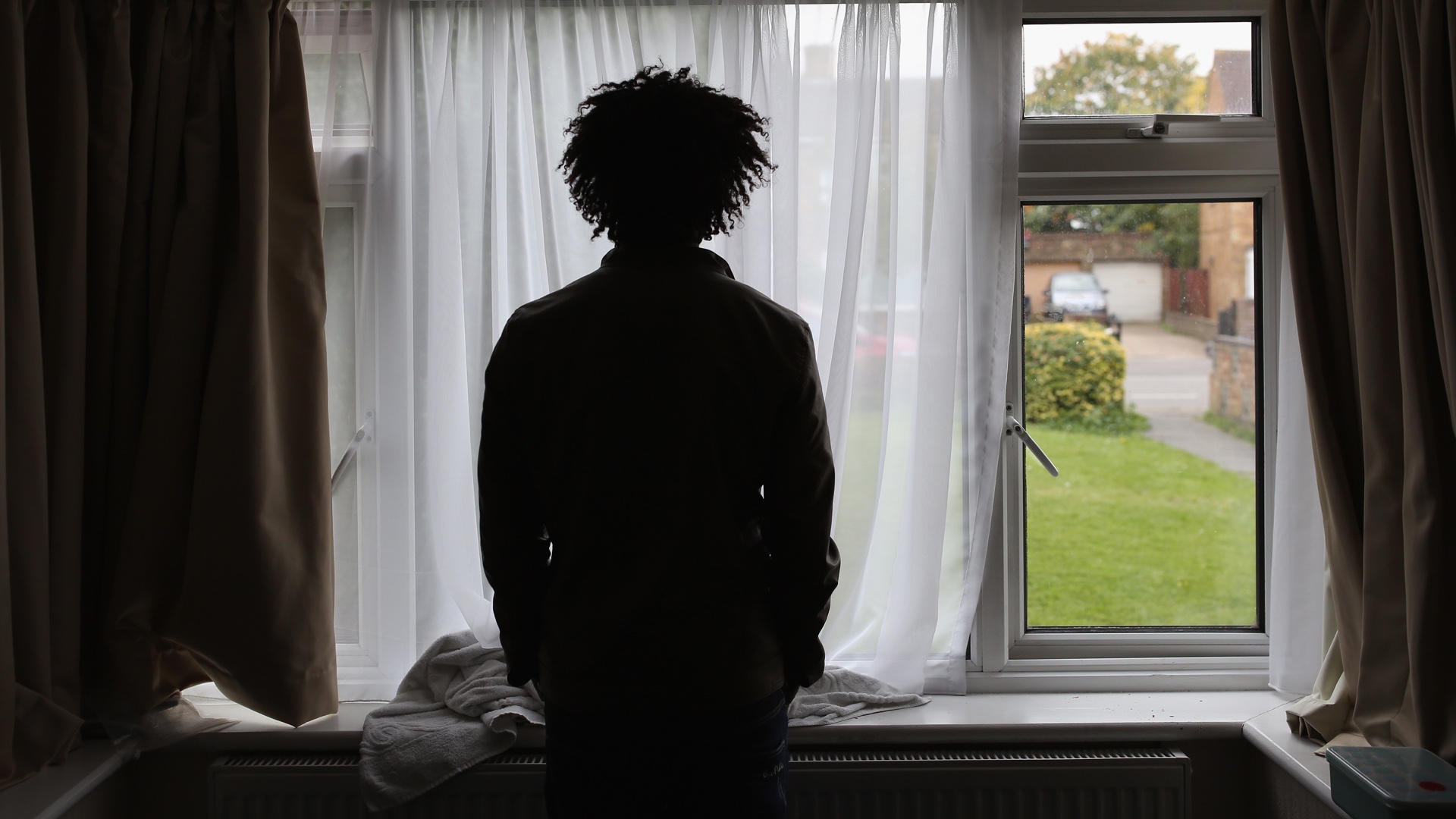
Ahmed Zaha, whose name has been changed to maintain his anonymity, is in his late 20s. He was born in a country in West Africa, where he lived for most of his life. Then, a few years ago, he attended a pro-democracy demonstration, which led to his detention and torture at the hands of the state. After he escaped, he fled to the United Kingdom in 2017, but was forced to leave his family, including a wife and young son, behind.
Ahmed now stays with a friend in South London while he awaits a decision on his asylum appeal. We are not mentioning his country of origin or any details about the torture he endured as this may put him in danger if he is returned. He told Al Jazeera his story.
The way I understand it, a job is work that someone does to earn material things: food, clothes, money. When you are recruited by an employer, a job has duties, tasks and responsibilities that are definite and specific, and that can be accomplished.
Back home, I was a physics and chemistry teacher. My job was to share knowledge with young people and sometimes pupils older than me – I enjoyed it very much. I loved these subjects because they are part of all of our lives.
For me, being a teacher was not just about teaching, but also about being another parent, a pillar of support and a good example. Because of my teaching, my love for my subjects and the relationships we built, most of the students in my class aspired to be scientists themselves.
Back home, I lived with my wife and young son who helped me make important decisions.
I had a good life then; until I was harassed and tortured by the government for my opposition to their policies and involvement in student activism at university. When I left university and started teaching, most of my colleagues supported the government, so I was exposed.
I saw my friends being killed and I realised I was no longer safe.
So I made the difficult decision to leave – not only my job, but also my young son and my pregnant wife.
Fearing for my life, I took the first chance I had to escape and ended up in the UK as an asylum seeker.
New language, new home
When I first arrived, we landed at nine in the evening in July, and the sun was still up. I had never seen anything like it before back home. I was amazed.
At the time, I spoke two African languages and fluent French, but very little English. “Hello, how are you?”, I could say, as well as “What, how, when, where” and a few verbs. But I could not understand a word anybody said in response.
I knew nothing about the asylum system but I learned that we were not allowed to work.
After much searching for information, I was directed to my country’s expatriate community in London. I met someone at the mosque who I lived with for a while, and he became a supporter and friend.
Six months later I found out I was meant to get an asylum allowance from the UK Home Office. I began receiving £36 ($45) each week and lived in a room provided by the National Asylum Support Service (NASS).
But the first payment did not arrive until four days after I moved there so I had nothing to eat and no money for food during that time. When the allowance did arrive, because the place had no pots I could use to cook, I had to spend the money on that – instead of on food to eat. That meant another week with no money for food.
Even once my asylum allowance began to arrive regularly, surviving for a week on that money was a full-time job. Knowing that it was not enough to live on, I looked for organisations that could help me.
A job with no pay
If you see the situation of an asylum seeker as a job, those organisations are like your employer. Your first responsibility is to go there and register yourself, and your duties are to present yourself there once every week or two, to receive whatever they can give you.
The first place I went to was the Notre Dame Refugee Centre in Trafalgar Square. I arrived at five in the morning to give myself more than enough time for when it opened at 8.30am. But there were already more than 40 people ahead of me. By now it was winter, and freezing cold. My friend had lent me a jacket but it was not warm enough.
Once inside, we were given breakfast and then waited again until 11am, when they started seeing people to try to find them solicitors or help them out in other ways.
On that first day, a Thursday, they did not get to me so I returned the following Monday when they opened next. I got there at 3am and was the second person in the queue. This time, I was seen, and they managed to find me a solicitor.
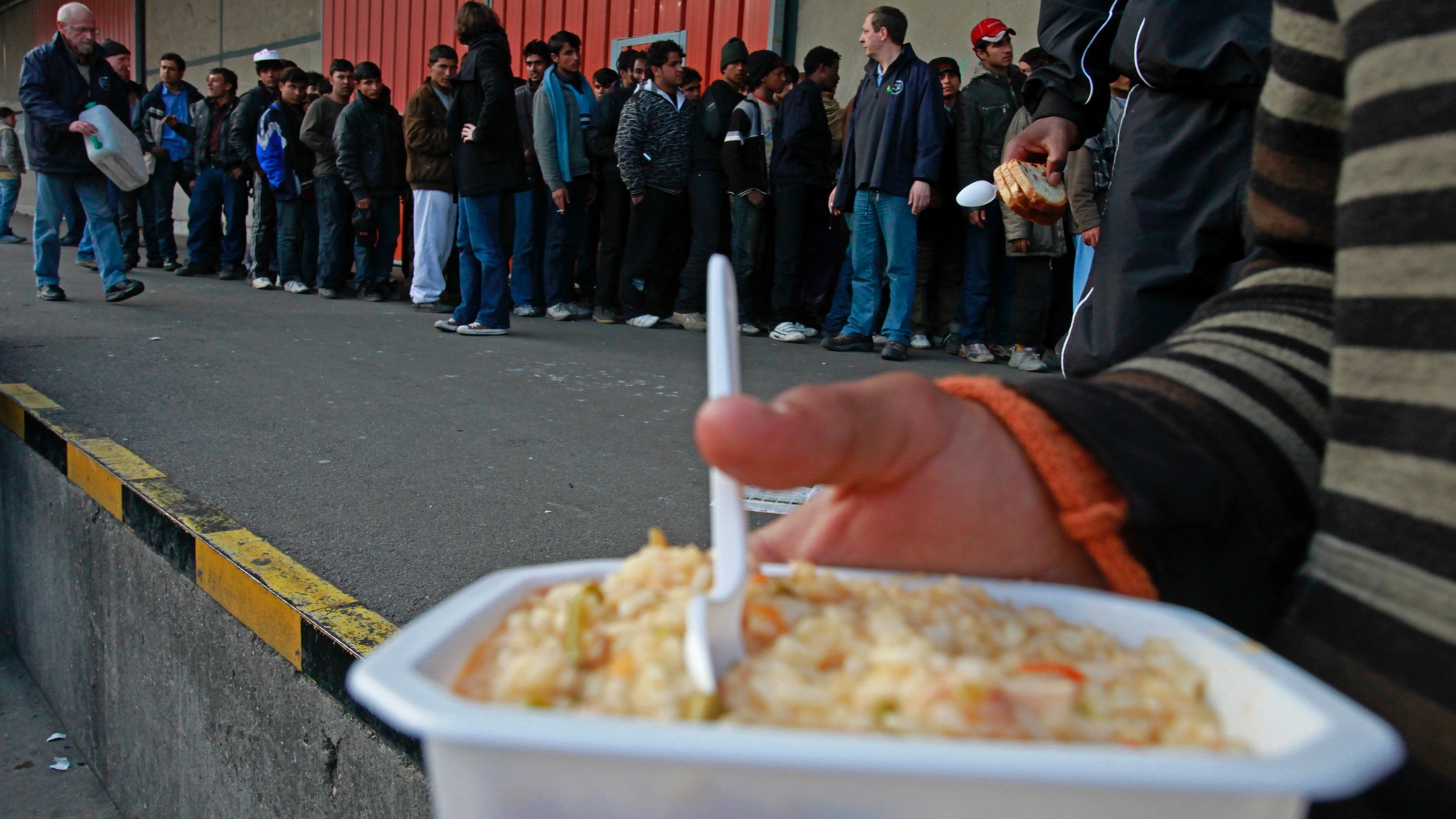
In some of these places, you have to eat the food they provide there and then, and it is only available on a particular day, once a week. Others give you the ingredients – pasta, beans, tuna, chicken or cream of tomato soup, biscuits, apples; I had never seen some of these things before.
Days with nothing
If and when your asylum claim fails – in my case, after six months – it is devastating.
The UK Home Office is known to have a “refuse asylum first, ask questions later” approach. Poor decision-making means that you have to keep putting in fresh claims until a fair one is reached.
In the meantime, your asylum support ends, so the job gets even more demanding. For a short while, you may get emergency support from an organisation like Freedom from Torture, but it is less than what NASS provided – barely £30 ($37) a week, and only for six weeks.
So then you are reduced to travelling further, to places where they feed you on site, and for less food. And whether you are sick or well, you have to go – because that is the only way you can eat. Now, because of coronavirus, food is more expensive than ever.
Most destitute asylum seekers eat only once a day; the idea of breakfast, lunch and dinner is impossible. I normally eat in the middle of the day; you have to accustom your body to this rhythm, because if you spend all your money in one day, you will go another six days without anything. You cannot afford to buy what is healthy; you have to buy what is cheap. Two pounds of potatoes, fried with ketchup – it is not healthy, but it is filling.
And when your asylum support ends, with it you lose the home provided by NASS.
So a new element of the asylum seeker’s job becomes finding shelter for the night. If you are lucky, you may have a friend who can take you in, but not for long. The kinds of friends you are likely to make in these circumstances probably have very little themselves – often just their own bed, which you may have to share, either in turn or at the same time as them.
I have now been in the UK for almost four years, and am currently staying with a friend of a friend of a friend in his South London flat; I am grateful for his sofa.
Putting clothes on your back, with no money, is not easy. Not all organisations have second-hand clothes to give you. Jackets are not so difficult but because of my height – I’m 6′ 3″ (1.9m) with long legs – trousers are impossible to find. Sometimes I look in the windows of charity shops and see something I like. But if it is at all smart or nice, I know I will not be able to afford it. So I do not even go in there. And as for new clothes from the shop – well, filling my stomach has to come first.
Still hoping
But through all of this, you still hope that eventually you will be able to stay in this country, because the alternative is too terrifying.
You try to learn English. I found a course but it required money to travel. So you think, “I need to study, I need to learn English, so I have to get there, one way or another”.
But with all of this, the money you had for food becomes less and less. So if you want to pursue your hopes, you may not eat at all for a day or even two. So you choose: sometimes you eat, sometimes you study.
All these places give us different things, but most of all they give us hope to continue and a brief respite from the stress of the situation.
The biggest element of my job intrudes into all these categories: it is called waiting.
Wherever I go, whatever I am there for, somebody else is always there before me. Sometimes, by the time I get to the front of the queue, they are closing and I have to come back another day.
This is how we live.
But I am not complaining; all these places give us different things, but most of all they give us hope to continue and a brief respite from the stress of the situation.
As an asylum seeker in Britain, just staying alive is a full-time job. It is just not one I applied for.
Freelance journalist Hopewell Chin’ono says President Emmerson Mnangagwa has taken over the opposition MDC-T because of his desire to control opposition politics in Zimbabwe.
Speaking during an interview with Zimbo Live TV, the award-winning journalist also challenged MDC Alliance Nelson Chamisa to drop the MDC brand and form a new party. He said:
The recalls [of MDC Alliance elected officials by the MDC-T] are a product of illegal and unconstitutional judgements. They are meant to decimate the opposition.
Emmerson Mnangagwa is now running a puppet opposition movement led by Douglas Mwonzora, Thokozani Khupe, Morgen Komichi and Elias Mudzuri.
There is nowhere in the world where in a normal democracy, people voted for the MDC Alliance then the MDC-T comes and says these are actually our votes.
What Nelson Chamisa and the MDC-A needs to do is to defend that vote, but more importantly, the MDC brand has been decimated so much that it is now associated with splits.
So, Nelson Chamisa simply needs to rebrand, form a new party, go with those that have chosen to stand with the people that voted for him, and his political party and move on.
Recalls we have seen them, they have given Zimbabweans an opportunity to see who was genuine and who was not.
Chin’ono asserted that the opposition has been heavily infiltrated by regime agents even during the days of Morgan Tsvangirai and the challenges the party is facing today can be attributed to the work of moles within its ranks. Said Chin’ono:
The MDC has been infiltrated for a long time. I told Morgan Tsvangirai in front of (his then advisor) Alex Magaisa that James Maridadi was an infiltrator.
Tsvangirai did not take that seriously, and as they say, the rest is history.


![[Illustration by Laura Callaghan]](https://www.aljazeera.com/wp-content/uploads/2020/06/5e67c7d8c3474769af711959bdabd5f5_18.jpeg?resize=770%2C513)

 Talk Rights